Leg Press: How It Builds a Resilient Body and an Unshakable Mindset
The leg press is a cornerstone of strength training, renowned for its ability to build powerful lower-body muscles. It’s the exercise you see in every gym, where athletes push incredible weights using their legs. But what if its true power wasn’t just in building quadriceps, but in forging an unbreakable will? The connection between the physical strength gained on the leg press and the mental fortitude required to succeed in life is the key to a complete transformation.
More than a simple movement, the leg press serves as a catalyst for developing powerful habits, discipline, and a robust fitness mentality. For you, a fitness mindset coach, understanding the full scope of its benefits unlocks a new way to inspire your clients. This article explores how this single exercise can revolutionize not just the body, but primarily the mind. Let’s delve into this journey of strength, both inside and out.
The Core Benefits of the Leg Press: More Than Muscle
The leg press is a foundational exercise, creating the bedrock for countless other movements and athletic endeavors. In the same way, it builds the foundation of a solid fitness mindset. The advantages are a powerful blend of mental and physical gains, working in synergy to create a positive feedback loop that enhances motivation, self-esteem, and long-term commitment.
7 Mental Benefits to Transform Your Clients’ Mindset
Here are the key psychological advantages of incorporating the leg press into a training regimen, turning every session into a lesson in mental strength:
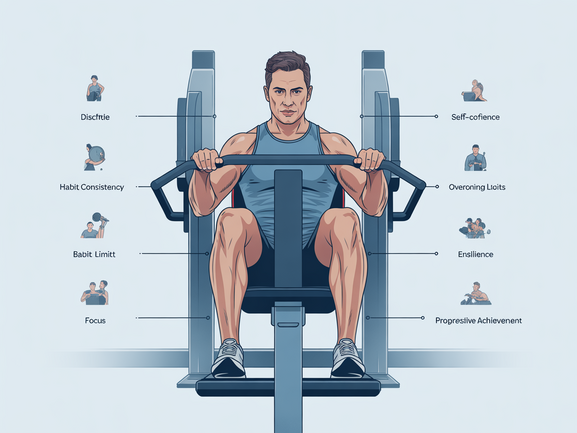
- Develops Unbreakable Discipline: The controlled nature of the leg press allows for a sharp focus on execution and load progression. Repeating this process, workout after workout, creates a powerful ritual that strengthens discipline and teaches the mind to commit to a goal, even when motivation wanes.
- Boosts Tangible Self-Confidence: Watching and feeling the weight progressively increase is tangible proof of overcoming challenges. Each added plate is a physical representation of progress, translating into an internal monologue of “I can do this” that echoes into every other area of life.
- Creates Consistent Habits: As a relatively safe and controlled exercise, the leg press is ideal for beginners, reducing intimidation and making it easier to stick to a training schedule. This regularity is the secret to turning exercise into one of the most crucial fitness habits.
- Shatters Mental Limits: That “last rep,” the one that burns and screams for you to stop, is where true growth happens. The leg press teaches the mind to negotiate with discomfort and push beyond perceived limits, a critical skill for personal and professional development.
- Enhances Focus and Concentration: Proper execution demands intense concentration on muscle contraction, breathing, and form. This state of mindfulness, often called the mind-muscle connection, is powerful training for maintaining focus in a world filled with distractions.
- Builds Emotional Resilience: Strength training is a proven stress reliever. It teaches the body and mind to handle pressure (literally) and recover stronger. This process of applying and adapting to stress builds remarkable emotional resilience.
- Provides a Sense of Progressive Achievement: The journey with the leg press is a series of small, measurable victories. This continuous sense of accomplishment fuels motivation and provides undeniable proof that directed, consistent effort yields visible, life-changing results.
According to a 2026 study in the Journal of Strength and Conditioning Research, individuals who tracked their strength progression reported a 47% increase in self-efficacy and goal commitment in other areas of their lives.
Physical Benefits That Reinforce a Positive Mindset
Of course, the physical gains are undeniable and serve as powerful positive feedback for the mind. A stronger body directly influences a stronger mindset. Strengthening the quadriceps, glutes, and hamstrings with the leg press not only improves performance but also:
- Improves posture and self-esteem: A stronger body carries itself more confidently and with better alignment, projecting an image of strength and self-respect.
- Increases functional capacity: Everyday tasks like climbing stairs, lifting objects, and playing with children become easier, generating a sense of independence and vigor.
- Reduces pain and limitations: Stronger leg and glute muscles provide better support for the knees and lower back, often reducing chronic pain. Less pain means more freedom to live and move, which has a direct positive impact on mood and mental health.
How to Master the Leg Press: A Practical Guide
To reap the profound mental and physical benefits, proper execution is paramount. An incorrect form not only increases the risk of injury but also diminishes the effectiveness of the exercise, undermining both physical progress and the associated confidence boost. Here’s a step-by-step guide to perfect leg press form.
Step-by-Step Guide to Proper Form
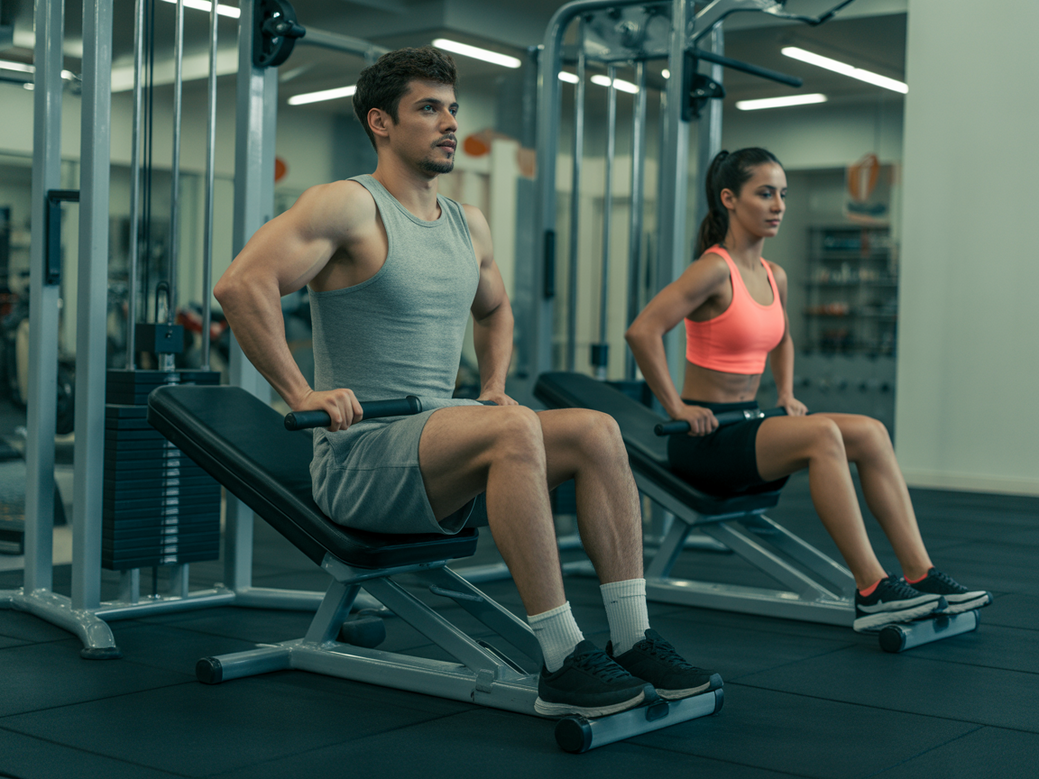
- Positioning: Sit on the machine with your back and head resting comfortably against the padded support. Your hips should be positioned securely at the bottom of the seat. Place your feet on the footplate about shoulder-width apart, with your toes pointing slightly outward.
- Initial Push: Extend your legs to push the platform and release the safety catches. Your knees should remain slightly bent at the top—never lock them out completely. This is your starting position.
- The Descent (Eccentric Phase): Inhale as you slowly and controllably lower the platform until your upper and lower legs form approximately a 90-degree angle. Ensure your lower back and hips remain flat against the seat; do not let your hips lift off the pad.
- The Push (Concentric Phase): Exhale and powerfully push the platform back to the starting position by extending your legs. Focus on driving the force through your heels and mid-foot to maximize glute and hamstring engagement.
- Completion: Once you’ve completed all your reps in the set, ensure you safely re-engage the safety pins before relaxing your legs.
Leg Press Variations for Targeted Results
One of the greatest advantages of the leg press is its versatility. By simply adjusting your foot placement, you can shift the emphasis to different muscle groups, allowing for more targeted development. As a coach, you can use these variations to help clients address specific weaknesses or goals.
- Standard Stance (Shoulder-Width): This is the classic setup, providing a balanced workout that targets the quadriceps, glutes, and hamstrings evenly. It’s the best starting point for overall leg development.
- High Foot Placement: Placing your feet higher on the platform increases the degree of hip flexion and extension. This shifts the emphasis toward the glutes and hamstrings. It’s an excellent choice for those looking to build a stronger posterior chain.
- Low Foot Placement: Placing your feet lower on the platform increases the range of motion at the knee joint. This isolates the quadriceps, making it a fantastic variation for building the muscles on the front of your thighs.
- Wide Stance: Moving your feet wider than shoulder-width, with toes pointed slightly out, targets the inner thigh muscles (adductors) and the inner portion of the quadriceps.
- Narrow Stance: A closer foot placement (hip-width or less) emphasizes the outer quadriceps (vastus lateralis) and can help create a well-defined outer thigh sweep.
Common Leg Press Mistakes and How to Fix Them
To ensure safety and maximize results, it’s crucial to avoid common errors. Here are the top mistakes to watch for:
- Mistake 1: Lifting Your Hips Off the Pad. This happens when you bring the weight too low, causing your lower back to round. It places dangerous stress on the lumbar spine.
Fix: Reduce the range of motion slightly and focus on keeping your entire back and hips glued to the seat throughout the movement. - Mistake 2: Locking Your Knees. Fully locking the knees at the top of the movement transfers the entire load from the muscles to the knee joint, creating a high risk of serious injury.
Fix: Always keep a slight bend in your knees at the top of the push. - Mistake 3: Using a Partial Range of Motion. Performing only small, quick reps (unless intentionally programmed) limits muscle activation and growth.
Fix: Lower the weight to a level you can control through a full range of motion, ideally to a 90-degree angle at the knees. - Mistake 4: Lifting with Your Toes. Pushing with your toes can lead to knee instability and places less emphasis on the powerful glute and hamstring muscles.
Fix: Consciously drive the push through your heels and mid-foot.
Leg Press vs. Squat: Which Is Better for a Fitness Mindset?
There is no “better” or “worse,” only different tools for different goals. Both are excellent but serve distinct purposes. Understanding their differences helps you and your clients make informed decisions that align with their physical and mental journey.
| Feature | Leg Press | Barbell Squat |
|---|---|---|
| Primary Muscles | Quadriceps, Glutes, Hamstrings (Isolated) | Quadriceps, Glutes, Hamstrings, Core, Back (Compound) |
| Stability | High (Machine-guided) | Low (Requires self-stabilization) |
| Mindset Focus | Focus on pure force, progressive overload, and pushing past pain thresholds safely. | Focus on technique, balance, body awareness, and functional strength. |
| Best For | Building raw strength and muscle mass with heavy loads safely. Excellent for beginners to build confidence. | Developing functional strength, balance, and intermuscular coordination. |
For building a resilient mindset, the leg press offers a unique advantage: it isolates the challenge. By removing the need for balance and stability, it allows a client to focus solely on the act of pushing. This makes it an exceptional tool for teaching progressive overload and demonstrating tangible strength gains, which is a powerful confidence booster.
How to Integrate the Leg Press into a Coaching Program
As a coach, you can use the leg press as a practical tool to teach mindset concepts. Encourage your clients to keep a training journal, noting not just the weights and reps, but also how they felt before, during, and after the exercise. This creates a powerful link between physical effort and mental victory. Research from institutions like the National Center for Biotechnology Information (NCBI) has shown a strong correlation between resistance training and reduced anxiety symptoms, a point you can share with clients.
🎯 Ready to start? Challenge your clients to add 5% more weight to their leg press next week and journal about the experience of overcoming that new challenge.
Elevate Your Coaching with Personal Millbody
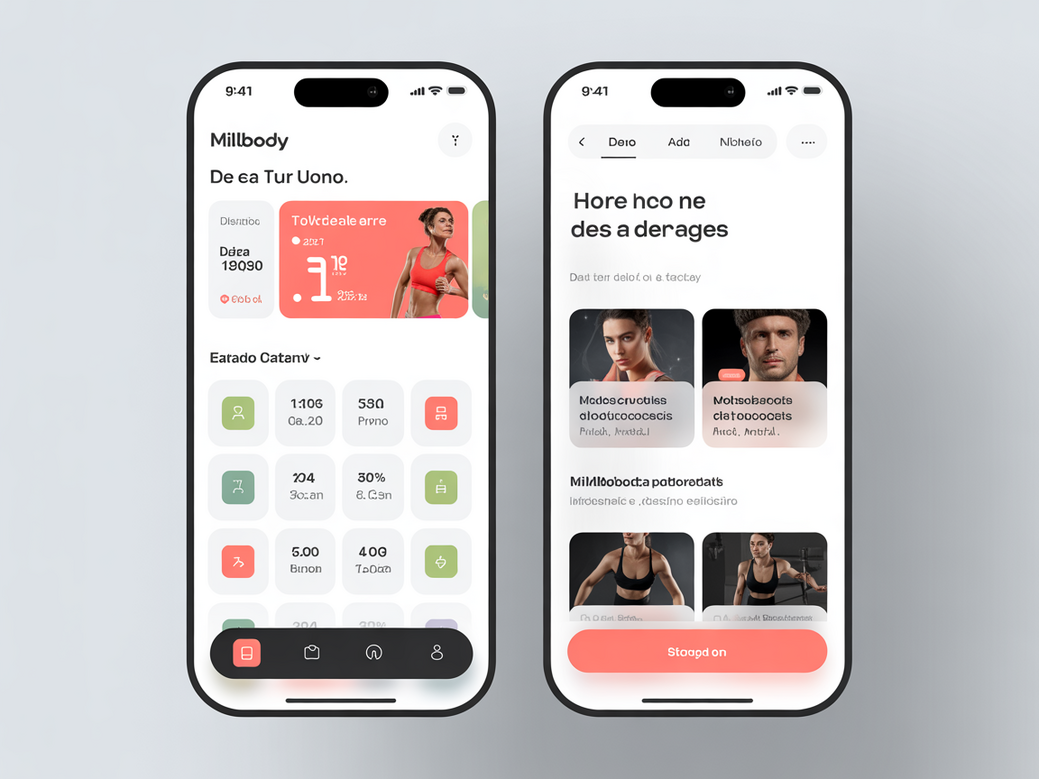
Imagine a platform where you can not only prescribe workouts but also track each client’s mental and emotional journey. Personal Millbody is the revolution your fitness mindset coaching career needs.
With our custom app, you provide tools like interactive training diaries, automated motivational messaging, and progress tracking—all designed to strengthen your clients’ fitness habits and mindset. Let technology handle the process so you can focus on what you do best: transforming lives from the inside out.
💡 Tip: Begin transforming your career and achieving your independence right now.
Frequently Asked Questions About Leg Press and Mindset
1. What muscles does the leg press work?
The leg press primarily targets the quadriceps (front of the thigh), glutes (buttocks), and hamstrings (back of the thigh). By changing your foot placement on the platform, you can emphasize one of these muscle groups more than the others.
2. How does the leg press help with mental discipline?
The consistent practice of the leg press, with a focus on progressive overload and perfect form, creates a ritual of commitment. This process teaches the mind to follow a plan and stay dedicated to goals, strengthening a discipline that can be applied to all areas of life.
3. Is the leg press safe for beginners?
Yes, the leg press is generally considered safer for beginners than free-weight squats because the machine guides the movement path and provides back support. This stability allows beginners to focus on building foundational strength and confidence without the risk associated with losing balance. However, proper form is still crucial to prevent injury.
4. How can you use the leg press to develop consistency?
Use the leg press as a pillar of your leg day routine. Set clear, progressive goals (e.g., increase the weight by 2% each week). Encourage logging progress in a training journal, like the one offered by the Personal Millbody platform, so the client can see their evolution. This visual proof of progress is one of the biggest drivers for creating consistent fitness habits.
5. When is the best time to do the leg press?
For most people, including the leg press in a lower-body workout 1 to 2 times per week is sufficient for excellent results. It can be performed after a primary compound lift like squats or as the main strength movement for the day. The most important factor is allowing adequate rest for muscle recovery. For more specific guidelines, consult a certified professional or resources like the American College of Sports Medicine (ACSM).
Last updated: January 05, 2026.
Want to read more articles and news about the fitness market? Visit our blog and stay on top of the latest trends!
Looking for a professional to guide you? Find and discover a Personal Trainer near you!