
Stretching for Athletes: The Ultimate Guide to Peak Performance and Injury Prevention

For any athlete, from the weekend warrior to the elite professional, stretching is the silent cornerstone of peak performance. It’s the deliberate practice of elongating muscles to enhance flexibility and expand joint range of motion. While intense training builds raw power, it is consistent stretching that forges a resilient, adaptable body capable of harnessing that strength effectively. Think of it as the essential self-care that transforms grueling effort into extraordinary, record-breaking results.
Have you ever wondered why some athletes seem to bounce back faster and consistently sidestep common injuries? The secret often lies in their unwavering dedication to a daily stretching and mobility routine. This guide delves into why stretching for athletes is a non-negotiable element for success and how you, whether an athlete or a professional instructor of stretching and mobility, can harness this vital knowledge. For fitness professionals, innovative platforms like Personal Millbody are transforming how you can connect with clients and build a thriving career.
The Core Benefits of Stretching for Athletes
Integrating a structured stretching regimen into your training does more than just make you feel good; it delivers a significant competitive advantage. These benefits are precisely why top-tier performers prioritize mobility work. Remember this mantra: the discomfort you feel in a deep stretch today becomes the strength and resilience you command tomorrow.
- Enhanced Flexibility and Superior Range of Motion: Greater mobility allows for more efficient, fluid, and powerful movements specific to your sport.
- Proactive Injury Prevention: Supple, elastic, and well-stretched muscles are significantly less susceptible to strains, tears, and other debilitating training injuries.
- Direct Performance Improvement: An increased range of motion can directly translate to a longer running stride, a more forceful tennis swing, or a deeper, more powerful squat.
- Accelerated Muscle Recovery: Post-workout stretching boosts blood flow to tired muscles, which aids in faster recovery and mitigates delayed onset muscle soreness (DOMS).
- Heightened Mind-Body Connection: The focused, introspective time of a stretching session helps you tune into your body’s subtle signals, dramatically improving your overall proprioception and body awareness.
The Science Behind Stretching: How Does It Actually Work?
To fully appreciate its benefits, it’s crucial to understand the science of stretching. It’s not merely about pulling on a muscle; it’s a sophisticated dialogue with your neuromuscular system. When you hold a stretch, you are conditioning both your muscle fibers and your central nervous system to comfortably accept a new, greater range of motion. This adaptation process, known as viscoelastic deformation, requires consistency and the application of correct techniques to yield lasting results.
Dynamic vs. Static Stretching: A Critical Distinction
Choosing the right type of stretch at the right time is paramount for maximizing benefits and preventing injury. Dynamic stretching is the ideal preparation for physical activity, while static stretching is best suited for the cool-down phase.
| Feature | Dynamic Stretching | Static Stretching |
|---|---|---|
| Best For | Pre-workout warm-up | Post-workout cool-down and flexibility improvement |
| Action | Controlled, active movements through a full range of motion | Holding a stretch in a challenging yet comfortable position for a set duration |
| Example | Leg swings, arm circles, torso twists | Holding a hamstring stretch for 30-60 seconds |
| Main Benefit | Prepares muscles for activity, increases heart rate and blood flow | Increases long-term flexibility, calms the nervous system, and aids recovery |
How to Build a Foundational Stretching Routine Today
Building a lasting habit is about consistency, not intensity. A brief, daily stretching routine is far more effective than a single, lengthy session once a week. As the saying goes, discipline is the bridge between your goals and your accomplishments.
- Define Your Specific Goal: Do you want to touch your toes, alleviate chronic back pain, or perfect your athletic form? A clear, measurable goal provides powerful motivation.
- Schedule and Anchor It: Dedicate 15-20 minutes at the same time each day. Anchor this new habit to an existing one, like your morning coffee or post-workout routine, to ensure it sticks.
- Focus on Major Muscle Groups: Start with the basics. Target the large muscle groups that impact athletic performance most: hamstrings, quadriceps, calves, hip flexors, glutes, chest, and shoulders.
- Listen Intently to Your Body: Stretch to the point of mild tension, never pain. If you feel a sharp or stabbing sensation, you’ve pushed too far. Breathe deeply and consciously relax into each stretch.
- Embrace Unwavering Consistency: True transformation in flexibility and resilience comes from making stretching a non-negotiable part of your daily life.
“Success isn’t always about greatness. It’s about consistency. Consistent hard work leads to success. Greatness will come.” – Dwayne “The Rock” Johnson
The Importance of Professional Guidance in Stretching
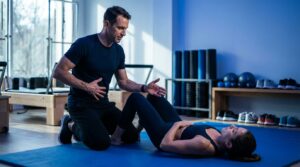
While starting on your own is commendable, partnering with a qualified professional can exponentially accelerate your progress and guarantee your safety. An expert in stretching and mobility can design a personalized plan tailored precisely to your body, your sport’s demands, and your specific performance goals. This is particularly vital if you have a history of injuries or specific biomechanical limitations.
A professional trainer provides crucial accountability and ensures you perform each stretch with correct form, maximizing its effectiveness and minimizing risk. For instructors, this expertise is your unique value proposition. The Personal Millbody platform was engineered to seamlessly connect skilled trainers with athletes seeking this exact guidance. It empowers you to manage clients, deliver customized routines, and scale your business effectively.
🎯 **Ready to elevate your training?** Create your account and join the leading platform for personal trainers in Brazil today!
💡 **Tip:** Download our free guide to advanced stretching techniques to deepen your knowledge!
Last updated: December 29, 2025
Frequently Asked Questions (FAQ)
1. How does stretching directly improve athletic performance?
Stretching improves performance by increasing the range of motion in your joints, allowing muscles to operate more efficiently and generate greater force. It also enhances blood circulation, which accelerates muscle recovery and reduces injury risk. A 2024 report from the American College of Sports Medicine highlighted that athletes with consistent flexibility routines showed up to a 15% improvement in explosive power metrics. A more flexible body is a more agile, resilient, and powerful one.
2. What is the ideal frequency for mobility and stretching sessions?
The ideal frequency depends on your activity level and specific goals. For general health and maintenance, most experts recommend daily sessions of 10 to 15 minutes. For significant gains in flexibility, longer sessions of 20-30 minutes, performed 3 to 4 times per week, are highly effective. The key principle is that consistency is more important than duration. For further reading, you can review studies on this topic, such as this one from a .gov source or research from educational institutions like Harvard.edu.
3. How can I find a qualified professional for stretching and mobility?
Finding a qualified professional is crucial for achieving safe and effective results. The Personal Millbody platform is specifically designed for this purpose. You can easily find and discover Personal Trainers near you who specialize in stretching, mobility, and a wide range of other fitness disciplines. Our platform verifies qualifications to ensure you connect exclusively with top-tier experts.
4. What are the main benefits of personalized coaching for flexibility?
Personalized coaching offers a training plan fully adapted to your unique needs, limitations, and goals. As a personal training client, you receive real-time feedback on your form, which is critical for preventing injuries during stretching. A personalized program evolves with you, ensuring continuous and safe progress. Moreover, the commitment to a professional boosts motivation and consistency, helping you achieve your flexibility goals faster.
5. How can I stay motivated for my daily self-care and stretching routines?
Staying motivated can be a challenge. Here are five practical tips: 1) Set small, realistic goals to build momentum. 2) Schedule a fixed time for your routine to create a strong habit. 3) Track your progress (e.g., how close you are to touching your toes) to visualize tangible results. 4) Vary your stretches to keep your routine engaging. 5) Find support from a professional or a community, like the one we foster at Personal Millbody. If you need guidance, don’t hesitate to contact us.